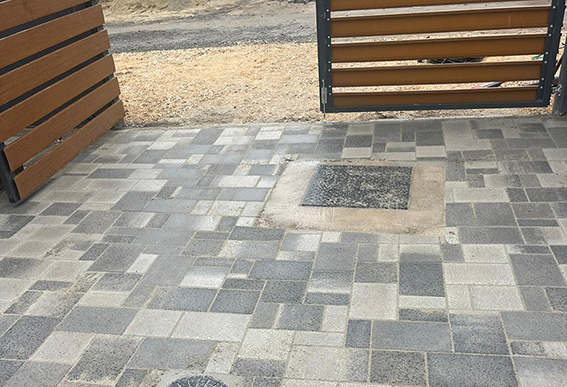
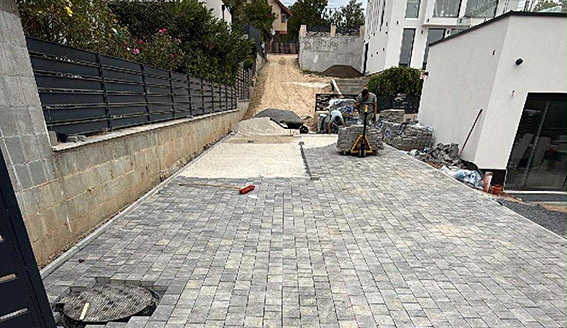
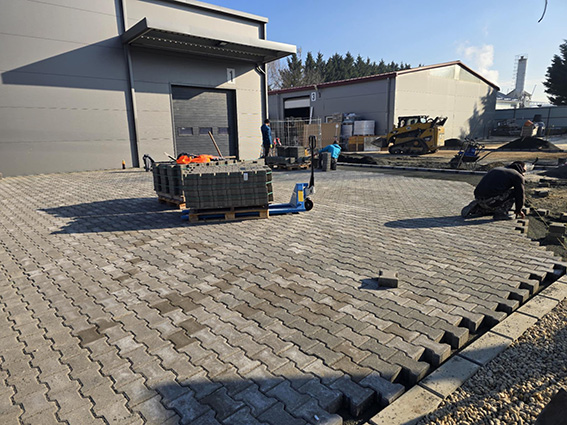
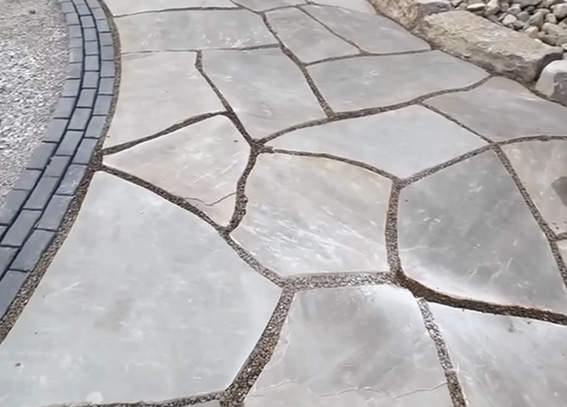
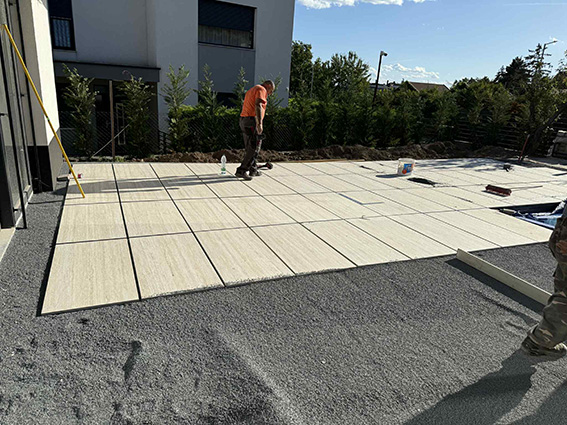
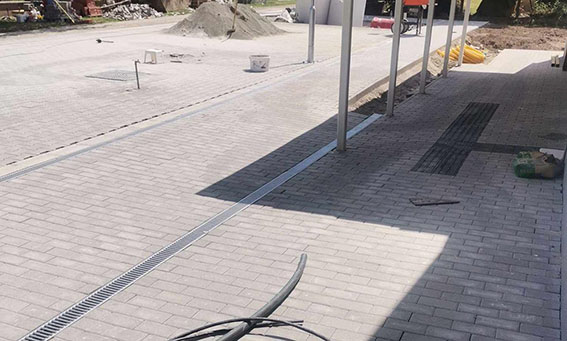
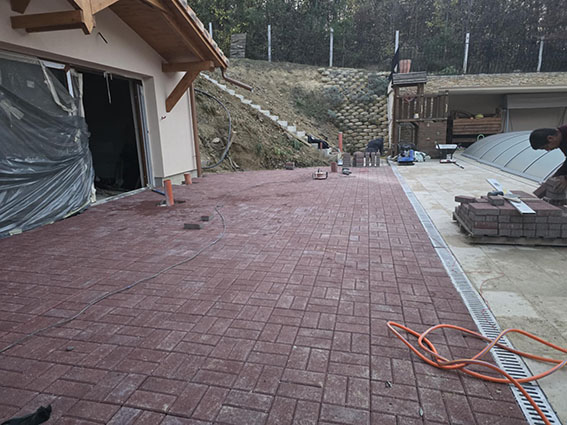
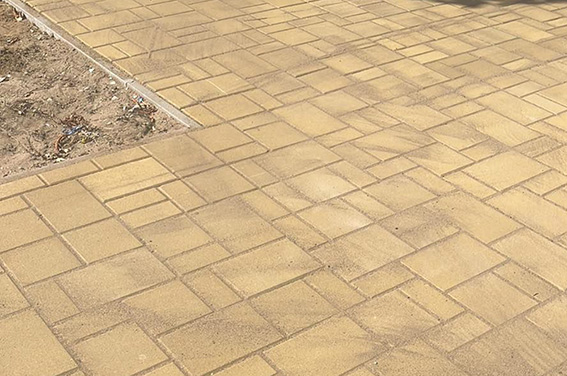
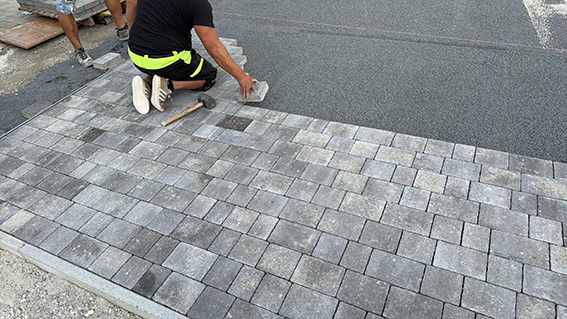
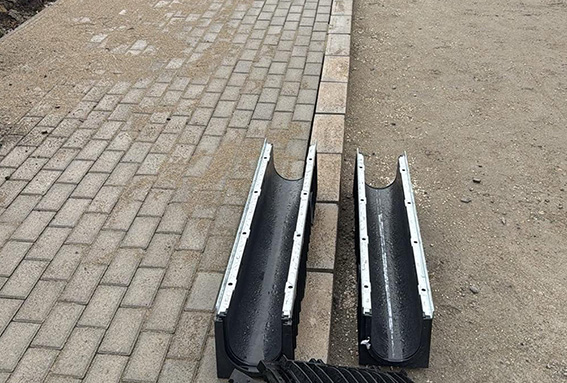
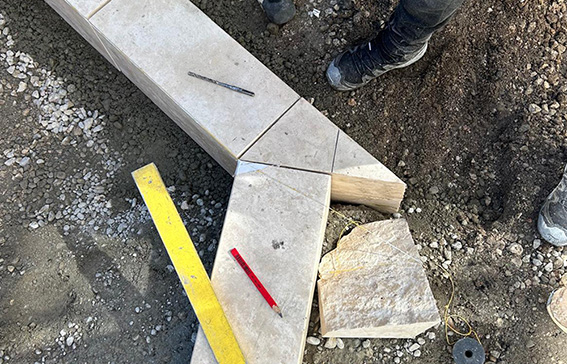
Our completed work
A selection of real projects — every photo is our own workmanship
Turnkey paver installation, concrete block paving and industrial hard standings — under contract, with guarantee and short lead times. From driveways on the Costa del Sol to loading yards inland, with results built to last.
Every job is covered by a written contract with a detailed technical specification.
Any problem caused by a workmanship defect is fixed free of charge within the guarantee period.
Fast mobilisation and flexible scheduling — we adapt to your timetable.
Delivery notes, declarations of performance, photo records and a formal handover.
The right solution for every type of surface — from groundworks to turnkey handover
For a car driveway we recommend pavers at least 6–8 cm thick on a stable base — with edge restraints, designed falls and full drainage.
Details →8 cm pavers on a 25–40 cm compacted crushed-stone base, with a reinforced build-up in the traffic lanes.
Details →10–12 cm pavers dimensioned for lorry traffic, on a cement-treated or asphalt/concrete base. Engineered pavement design.
Details →4–6 cm pavers on a 10–20 cm base. Accessible design, the right laying pattern and stable edging.
Details →Attractive, permeable solutions for gardens and terraces. Natural stone or concrete pavers with garden kerbs.
Details →Full lift, base correction and relaying. A surface-only fix never lasts — we remove the cause.
Details →A precise price is only possible after a site survey — the figures below are indicative rates
If you supply your own materials, or we lay on a base prepared by your builder
Turnkey package: from excavation to handover
Car parks, yards and depots, with a size-based quote
Lift, base correction, relaying
Transparent, responsible workmanship — every step documented
Free visit and measurement, ground assessment, drainage plan, your requirements.
A detailed, itemised quote with the layer build-up, bill of materials and deadline.
Written contract fixing the guarantee terms and the payment schedule.
Groundworks, sub-base, kerbs, paver laying and jointing — exactly as designed.
Level survey, compaction testing, drainage test, photo documentation.
Handover of the full documentation, guarantee certificate and invoicing.
Durability comes from the base, not from the paver
| Type of area | Paver thickness | Bedding layer | Sub-base | Notes |
|---|---|---|---|---|
| Pedestrian, garden | 4–6 cm | 3–5 cm of 2/5 mm gravel | 10–20 cm crushed stone | Thicker on weak ground |
| Car driveway | 6–8 cm | 3–5 cm | 20–30 cm | Edge restraints essential |
| Car park | 8 cm | 3–5 cm | 25–40 cm | Reinforced in traffic lanes |
| Lorry traffic, industrial | 10–12 cm | 3–4 cm | 40–60 cm + cement-treated base | Engineered design required |
| Permeable build-up | 8–12 cm | Special open-graded | Open-graded or hydraulically bound | Joints and drainage are critical |
A selection of real projects — every photo is our own workmanship
Professional rigour, transparency, results that last
We work to UNE-EN 1338, the Spanish PG-3 specifications and technical recommendations for pavements. We don't just lay blocks — we design the whole pavement structure.
Standing water is a pavement's worst enemy — and Málaga's torrential autumn rains are no joke. On every job, our first question is where the rainwater goes.
Full documentation: CE marking, compaction tests, handover certificate. It protects your interests.
The advantage of pavers over asphalt: if a buried service needs access, the blocks can be lifted and relaid — without leaving a trace.
Everything worth knowing about block paving
Labour-only paver installation starts from €16/m². The turnkey package (20 cm crushed-stone sub-base + 10 cm cement-treated base + 10×20×6 cm pavers) is €84/m² + VAT (21 %) both under 50 m² and between 50 and 150 m². Repair of sunken pavers from €30/m². A precise quote requires a free site survey — the price depends on the ground, the slope of the site and the materials you choose.
For pedestrian areas 4–6 cm, for a car driveway 6–8 cm, for car parks 8 cm, and for industrial or lorry traffic 10–12 cm thick pavers are recommended. Durability, however, depends far more on the quality of the sub-base and the drainage than on the thickness of the paver itself.
A typical driveway (30–60 m²) takes 1–3 working days depending on the ground and the condition of the base. Larger car parks and industrial areas take proportionally longer. We commit to a firm deadline in the written quote.
Yes. Every job comes with a written guarantee whose terms are fixed in the contract. Any problem arising from a workmanship defect during the guarantee period is repaired free of charge.
On private property (your own yard, garden or driveway) a licencia de obra menor or a comunicación previa at the town hall is usually all that is required — in many municipalities a simple notification suffices. Work on public land or a road connection needs municipal authorisation. We help you with the paperwork; local rules should always be checked with your ayuntamiento.
Pavers look better, can be lifted and relaid, are easy to repair and give simple access to buried utilities. Asphalt is faster to lay and suits continuous heavier traffic. Pavers are recommended for car parks, footpaths, squares and yards; asphalt for roads and very large busy car parks.
The most common causes: a sub-base that is too thin, uncompacted subgrade, a bedding layer that is too thick, missing edge restraints, or standing water in the base. A lasting repair means fully lifting the affected area, correcting the base and relaying — a surface-only fix does not last.
For pedestrian areas a stretcher (running) bond is fine. For vehicle traffic a herringbone bond is recommended because it distributes shear forces better. Heavy industrial loads require thicker industrial pavers laid in an interlocking bond.
After laying, dry, clean jointing sand or fine crushed aggregate is swept into the joints and the surface is compacted with a rubber-matted plate compactor. Jointing is then repeated. A top-up a few weeks later is recommended, because the jointing material settles and gaps can appear.
Yes. A permeable build-up needs an open-graded bedding and base layer plus special permeable joint filling. This lets rainwater soak into the ground, reducing run-off and the load on the drains — a real advantage in Málaga, where autumn downpours can overwhelm conventional drainage.
On the coast, practically never; inland comarcas such as Ronda and Antequera see occasional light frosts. The real enemy here is water: a well-compacted crushed-stone base of sufficient depth, with no water standing in the build-up (geotextile where needed), protects the pavement against the rare frost and — far more importantly — against torrential rain.
The bedding layer is the 3–5 cm layer of fine crushed aggregate (e.g. 2/5 or 4/8 mm) directly under the pavers. Its job is levelling and even load distribution. It must not be left too thick, otherwise rutting and waviness develop. Sand should be avoided under heavier loads — it can wash out.
Yes, edging is essential. Pavers only hold their position with lateral support. Without kerbs the pavement spreads apart and the edges sink. Kerbs must be set in a concrete bed with a concrete haunch behind them.
A cross-fall of at least 2% is needed, sloping away from the building. Drainage channels, linear grates, point gullies or soakaways collect the water. Standing water is a pavement's worst enemy: it soaks and undermines the base — something Málaga's torrential autumn rains put to the test every year.
Any firm ground — but soft, organic, silty or waterlogged soil must first be dug out and replaced. The bearing capacity of the subgrade is characterised by the Ev2 modulus (plate load test), which must reach the value required by the Spanish PG-3 specifications. Geotextile or geogrid can be used where needed.
In the province of Málaga, usually yes — winters are mild, so we work all year round. What we avoid is laying during and right after heavy rain, when the subgrade is soaked; and on the rare frosty mornings inland (Ronda, Antequera) we simply wait for the ground to thaw. In high summer the main care point is curing concrete and cement-treated bases properly.
Full documentation: delivery notes and declarations of performance for CE-marked products (to UNE-EN 1338), compaction test reports, photo documentation and the formal handover certificate.
A concrete slab is a continuous reinforced plate, excellent for very heavy axle loads (industrial, logistics, bus stations). Concrete pavers are small modular units (UNE-EN 1338) whose advantages are repairability, permeable build-up options and aesthetics. For low-speed traffic and public spaces pavers are the ideal solution.
Contact us by phone (+34 613 656 443), by e-mail (oficina@adoquin.eu) or via the quote form on this site. After a free site survey we send a detailed written quote, usually within 1–2 working days.
Our completed work includes private driveways, residential car parks, warehouse areas, industrial yards and public spaces across the province of Málaga. A reference list and photos are available on request. Our gallery shows a representative selection of our work.
We discuss your requirements, measure up on site, and send a precise, itemised quote within 1–2 working days.