Across most of the province of Málaga, frost is a rarity — but in the inland comarcas around Ronda and Antequera, and in the higher villages, the thermometer does dip below zero on the odd winter night, and the footpath or driveway greets you with frost or a film of ice in the morning. That is when many people reach for ordinary kitchen salt (sodium chloride): it is cheap, available everywhere, and it really does melt ice quickly. The trouble is that what you gain in safety, you lose in the life of your paving. Salt does not only work on the ice — it works on the blocks too.
How does salt damage paving blocks?
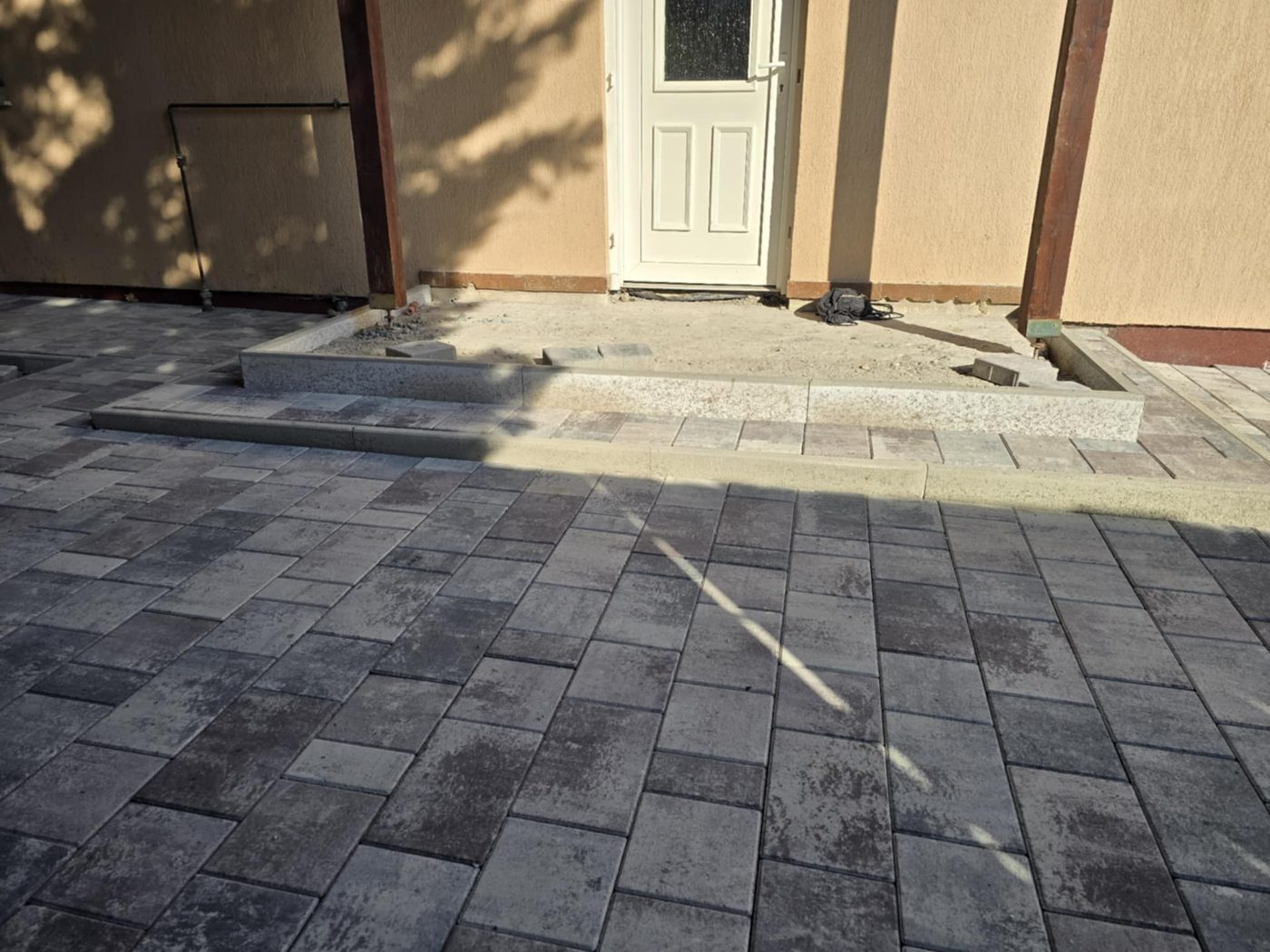
Brine seeps into the tiny pores of concrete pavers. When the temperature hovers around freezing point — exactly what happens on cold inland nights, with frost before dawn and a thaw by mid-morning — the salty water in the pores freezes and thaws, freezes and thaws. That cycle bursts the surface of the block from the inside. The result is a flaking, scaling, cracking surface: so-called freeze–thaw salt scaling. This is precisely why UNE-EN 1338 tests pavers for freeze–thaw resistance with de-icing salts; but even a quality block suffers if it is dosed with salt year after year.
Salt's other drawbacks

- Plant damage: brine seeps through the joints into the soil and harms the lawn and plants along the paving.
- Corrosion: the mix of slush and brine attacks car underbodies as well.
- Limited effect: in a hard freeze, a few degrees below zero, common salt loses effectiveness — and on the coast, where the real problem is rain rather than ice, it simply achieves nothing.
What to use instead
Fortunately there are several paver-friendly alternatives:
- Anti-slip grit: sand or fine chippings do not melt ice, but they give immediate grip and damage nothing. For the handful of frosty mornings inland Málaga gets, they are usually more than enough.
- Calcium or magnesium chloride: they work at lower temperatures and far smaller quantities are needed than with kitchen salt, so the surface takes less punishment.
- Gentle de-icers: chloride-free products developed specifically for block paving and concrete.
Prevention is the best defence
In our climate, the everyday enemy of paving is not snow but water and slipping: the autumn rains leave surfaces wet, and in shaded spots algae and green film can turn pavers into a skating rink even without frost. The recipe is the same as against ice: proper falls and drainage so water never stands, regular cleaning of shaded areas, and a textured, slip-resistant block on delicate spots such as ramps and steps. Inland, when a frosty night is forecast, spread the grit in the evening and clear the frost in the morning before it gets trodden down — compacted ice is far harder to remove, and that is exactly when salting becomes tempting. You will find more ideas in our article on anti-slip footpaths.
Kitchen salt, then, is a short-term fix and a long-term problem. A well-laid block pavement deserves gentle treatment on those few cold nights a year — and in the province of Málaga, with so little frost about, giving up the salt costs you nothing.
Is your paving already showing scaling or worn patches? We are happy to advise anywhere in the province of Málaga: call +34 613 656 443, write to oficina@adoquin.eu, or book a free site survey.
Planning a paving project?
Request a free site survey: we measure, advise, and within 1–2 working days you receive a detailed written quote.