The great advantage of block paving is that it can be maintained and repaired. Some jobs you can do yourself with a bit of skill; others call for machinery and experience. Here is the guide to what is worth taking on yourself.
What you can do yourself

These jobs are simple, need no machinery, and do a great deal for the condition and lifespan of the paving:
- Topping up the joints: replacing washed-out jointing sand in dry weather. Spread the sand over the surface and brush it into the joints; repeat as the sand settles.
- Weed removal: with a joint scraper, very hot water or steam. Avoid chemical weedkillers, which leach into the ground.
- Cleaning: sweeping and gentle washing. Use a pressure washer only with great care – it can strip the sand out of the joints.
- The odd loose block: lift it carefully, top up and compact the bedding, and relay the block level with its neighbours.
What needs a professional
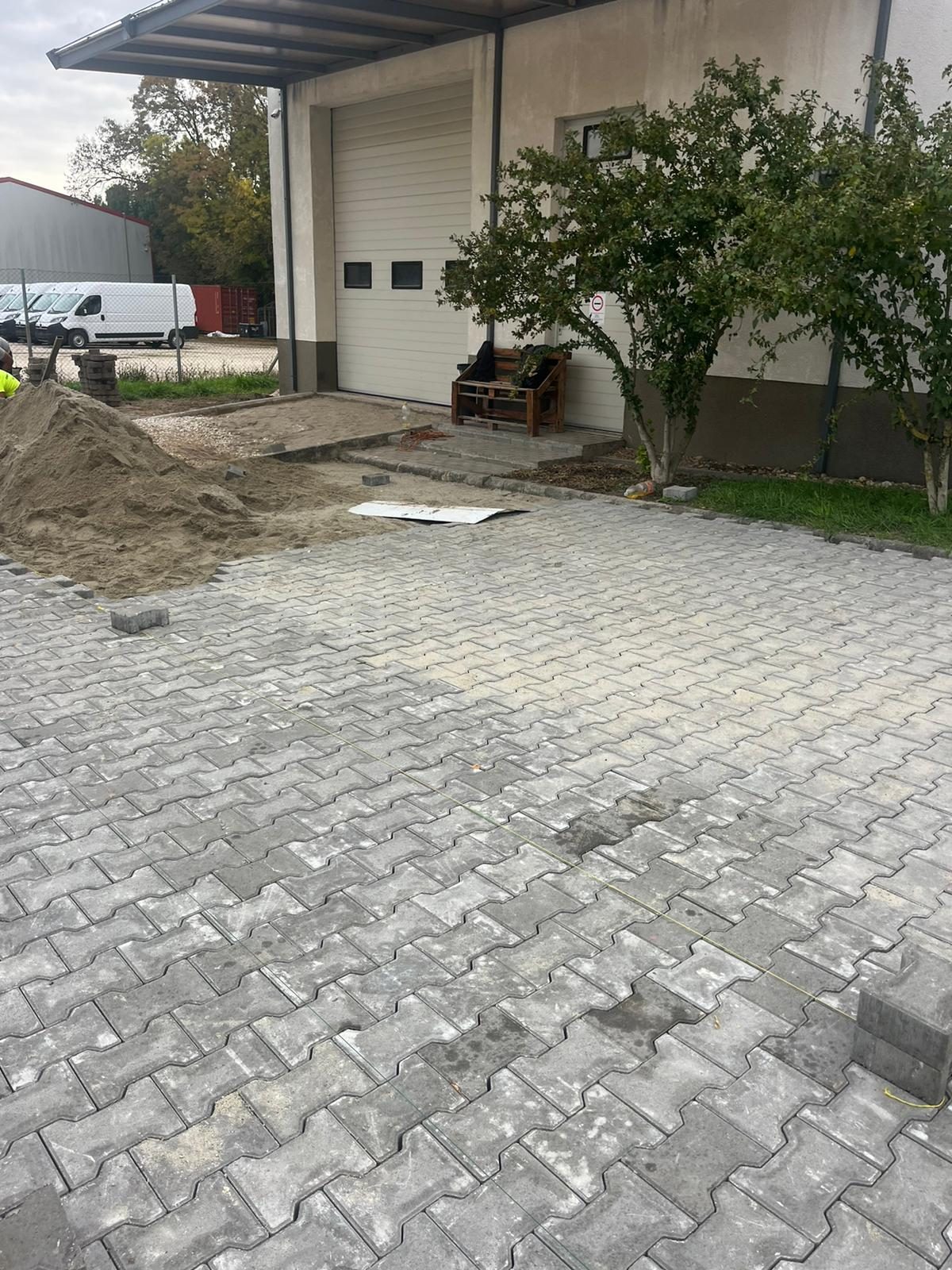
- A sunken surface: reinstating the sub-base with machinery and proper compaction – this cannot be substituted by hand.
- A spread kerb line: re-fixing the kerbs in a concrete bed with a concrete haunch.
- A structure undermined by water: re-planning the drainage and rebuilding the surface.
- Large-area undulation: this is a sub-base failure and calls for a complete rebuild.
How to recognise which case you have
If the defect is superficial (joints, one or two blocks, weeds), you can sort it out yourself. If the defect is structural (settlement, undulation, a kerb spreading along a long stretch), the source is in the layer below and a professional is needed. When in doubt, ask for a site survey before starting any major work.
Prevention is the best repair
Checking the joints once or twice a year, keeping an eye on the kerbs and maintaining the drainage costs far less than rebuilding the surface a few years down the line. That small, regular effort multiplies the life of the paving.
Repairability is block paving's greatest advantage over concrete – make use of it in time.
Tools you need for home repairs
Small repairs need no machinery, just a few simple tools: a joint scraper or weeding knife, a hand brush, fine jointing sand, a rubber mallet for tapping blocks back into place, and a flat pry bar for lifting blocks carefully. With these, topping up joints, removing weeds and resetting the odd loose block can all be done at home.
Topping up joints step by step
A washed-out joint is the most common maintenance job. In dry weather, spread fine jointing sand over the paving and brush it into the joints with a hand brush. Water it in gently so the sand settles, and repeat after a few days until the joints are full. Well-filled joints stop weeds taking hold and stabilise the blocks.
Weed removal without chemicals
Weeds growing in the joints are best dealt with mechanically (with a scraper) or with very hot water or steam. Chemical weedkiller is best avoided, as it washes into the soil and the rainwater runoff. The most effective prevention is a full joint: where there is no room and no moisture, weeds cannot take root.
Resetting a rocking block
If a single block has tipped or settled, lift it out carefully with the pry bar. Top up or level the bedding beneath it, compact it, then replace the block and tap it flush with its neighbours using the rubber mallet. Finally, refill the joints. The whole job takes 15–20 minutes and stops the fault spreading to the neighbouring blocks.
When not to attempt it at home
If the damage covers a large area (settlement or undulation over several square metres), the kerb has tipped outwards along a long stretch, or water has undermined the structure, you are looking at a structural problem that cannot be fixed durably without machinery and experience. Home patching will only hold for a while – it is worth calling a professional to remove the real cause. More detail in our article on repairing sunken paving.
An annual maintenance routine
The secret of long-lived paving is small, regular effort. Once a year: check and top up the jointing sand, remove weeds, clean the drainage channel gratings and inspect the kerbs. This few-hour routine multiplies the life of the surface. For bigger repairs, call us: +34 613 656 443 · oficina@adoquin.eu.
A seasonal maintenance calendar
Paving maintenance can be organised around the seasons. In spring, check for any damage left by the winter rains, top up the jointing sand and remove moss from shady spots. In summer, weeding and cleaning are the main jobs. In autumn, the priority is clearing leaves from channels and gullies before the torrential rain events (DANA), so they can carry the water away. In winter – mild on the coast – careful cleaning is all that is needed; in the inland comarcas with their occasional light frosts, avoid de-icing salt, which attacks concrete, and prefer mechanical clearing.
The right cleaning products
Water and a brush are usually all block paving needs. For stubborn stains (oil, grease) there are degreasers made for pavers; for moss, steam or an enzyme cleaner. Avoid strongly acidic or alkaline products, which can attack the concrete and dull the colour. Test any new product in an out-of-the-way corner first.
Types of jointing sand
Several materials exist for filling joints: plain silica sand is the most common and cheapest; stabilised (polymeric) jointing sand resists wash-out and weeds better, but costs more. The choice depends on how hard the surface works: on heavily used or sloping areas, stabilised jointing is the more durable option – especially where torrential rain punishes the joints.
When to call a professional
If a fault returns after you have repaired it, the real cause lies deeper (sub-base, drainage). In that case, instead of more home patching, you need a professional who removes the cause. The same goes for large-area settlement, a spread kerb or a water-undermined structure: the answer is professional reinstatement with machinery. For a survey, call: +34 613 656 443 · oficina@adoquin.eu.
Worked example: the payback of maintenance
The annual few hours of maintenance (topping up sand, weeding, clearing channels) is a negligible outlay. Neglecting it, however, leads to washed-out joints, water undermining the bedding, and within a few years a large-area settlement whose repair costs many times the maintenance. Small, regular effort is the best investment in the life of the surface.
Decision aid: DIY or professional?
DIY: topping up joints, weed removal, cleaning, one or two loose blocks. Professional: large-area settlement, a spread kerb, a water-undermined structure, a recurring fault. The simple rule: if the defect is superficial and local, you can handle it; if it is structural and extensive, you need a professional who removes the cause rather than treating the symptom.
Myth: "a pressure washer is the best way to clean"
The reality: used too close or at too high a pressure, a pressure washer strips the sand out of the joints and opens the surface up to weeds and water. The right method is gentle washing from a proper distance, topping up the jointing sand immediately if any does wash out. Most of the time, water and a brush are all block paving needs.
Summary
- DIY: joint top-ups, weed removal, cleaning, the odd loose block.
- Professional: settlement, a spread kerb, a water-undermined structure.
- Avoid chemical weedkillers; mechanical or hot-water methods are recommended.
- A pressure washer can strip the joints – use it carefully.
- Annual maintenance multiplies the life of the paving.
Key terms
Stabilised jointing sand: jointing sand with a binder, resistant to wash-out and weeds.
Impregnation: a protective surface treatment that reduces water absorption and staining.
Frequently asked questions
What can I repair on my paving myself?
Topping up joints, removing weeds, cleaning, and resetting the odd loose block.
What needs a professional?
Sunken surfaces, spread kerbs, water-undermined structures and large-area undulation.
How can paving deterioration be prevented?
Annual joint checks, keeping an eye on the kerbs and maintaining the drainage.
Need help with a repair in the province of Málaga? Call us on +34 613 656 443, write to oficina@adoquin.eu, or request a free, no-obligation quote.
Planning a paving project?
Request a free site survey: we measure, advise, and within 1–2 working days you receive a detailed written quote.