When new block paving is to replace an old concrete path or yard, the same question almost always comes up: can the pavers be laid directly on the existing concrete, or does it have to be broken out first? There is no single answer — it depends on several factors, and both solutions have their place.
When can the concrete stay?
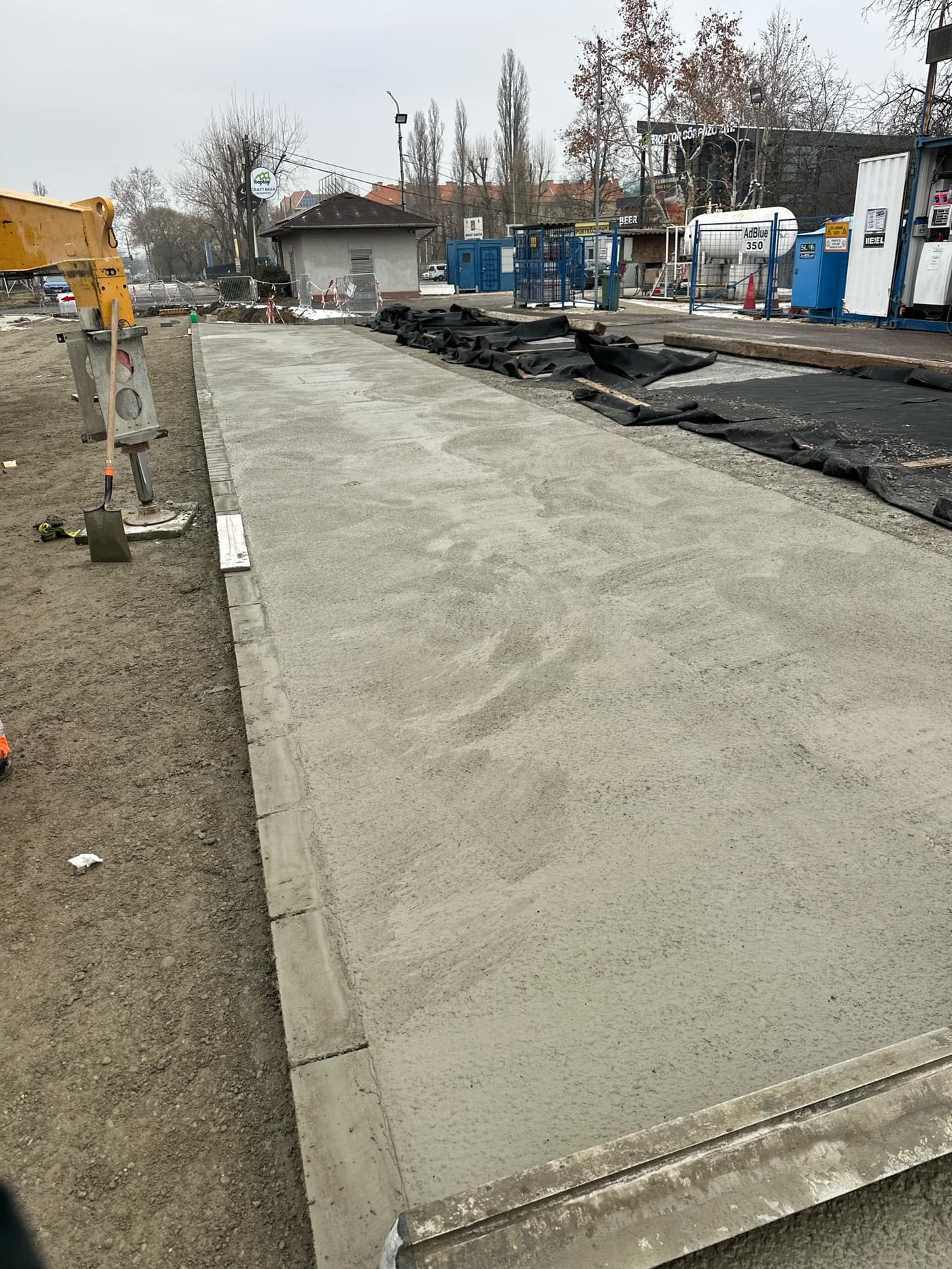
If the existing concrete slab is sound, crack-free, stable and has a good fall, it can serve as a rigid base. In that case the pavers are usually bedded in mortar or bonded with a cement-based adhesive, much like tiles. The key issue is drainage: any water sitting on the concrete must be led away, otherwise it lingers in the joints, encouraging staining, algae and slippery surfaces — and in the inland comarcas around Ronda and Antequera, the occasional light frost can even damage the jointing.
When does it have to be broken out?
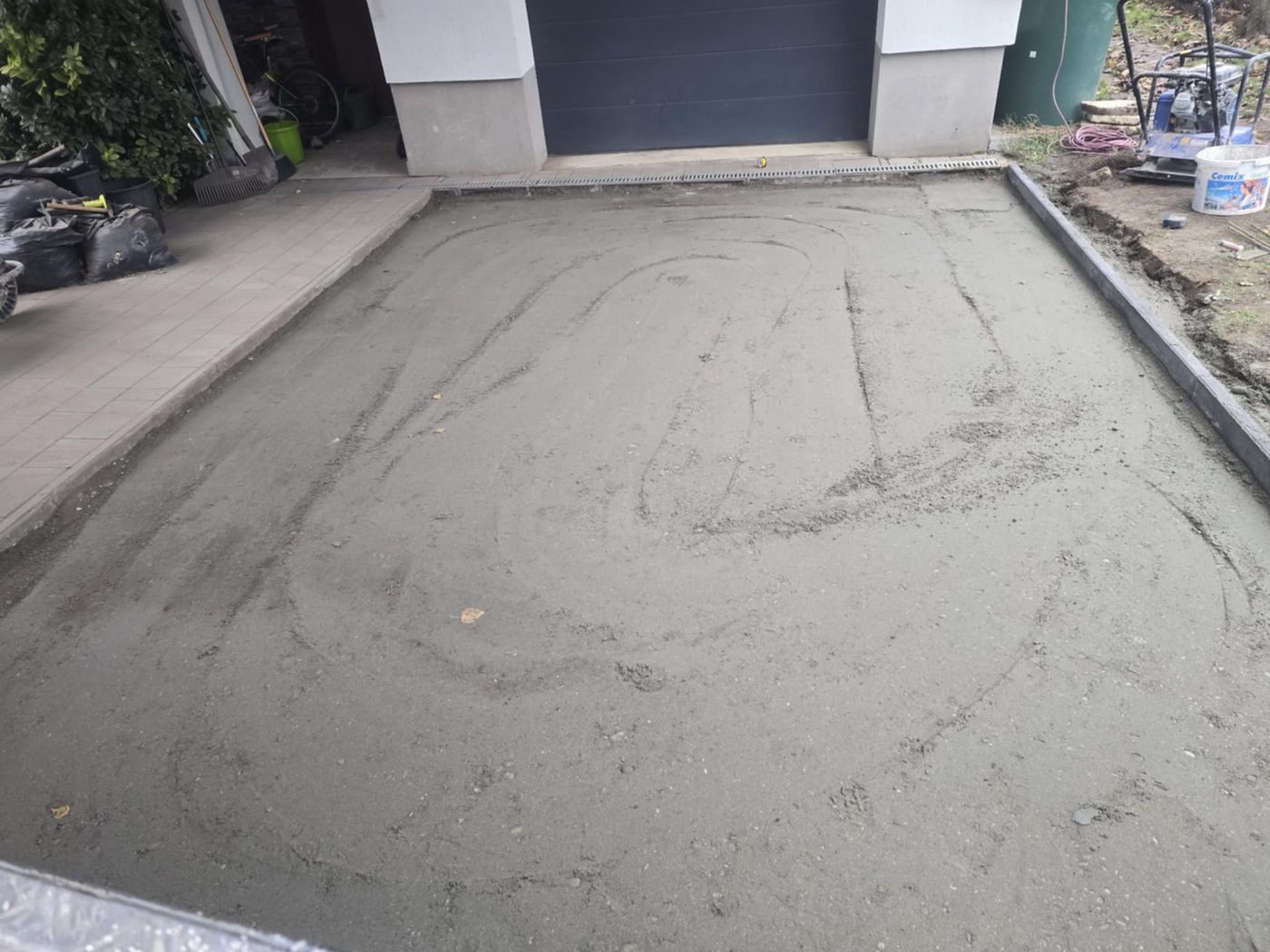
- Cracked, fragmented concrete: a moving, unstable slab will drag the paving down with it.
- Poor or missing fall: if water cannot run off, building on top only relocates the problem — critical given the torrential autumn rains (DANA events) typical of Málaga province.
- Sunken, uneven surface: pavers do not correct the base's defects; they reproduce them.
- Height restrictions: when building on top would raise the finished surface too high (thresholds, doors, gates).
Conditions for building on top
If the concrete stays, pay attention to the following: the surface must be clean and load-bearing; provide an adequate fall for water (at least 1.5–2 %); use a bonding material suited to the purpose (mortar or adhesive); and resolve the surface drainage, because on an impermeable base the water cannot soak into the ground. In many cases a drainage channel is installed along the edge of the slab.
The question of levels
Building on top always raises the finished level by the thickness of the concrete plus the mortar plus the paver. Check that this new level does not clash with gates, thresholds, steps or the level of adjoining surfaces. Sometimes it is precisely those few centimetres that settle the demolition question.
Laying pavers on a concrete base can therefore be a good solution — provided the concrete is sound, well-graded and the drainage is resolved. With a slab in doubtful condition or with a poor fall, breaking it out is the safer route to a lasting result. If you are starting from scratch, see also our article on the paver base.
Not sure which applies to your case? We assess the condition of your concrete on site, free of charge, throughout the province of Málaga. Call us on +34 613 656 443, e-mail oficina@adoquin.eu or get an indicative price with our paving calculator.
Planning a paving project?
Request a free site survey: we measure, advise, and within 1–2 working days you receive a detailed written quote.