Thin concrete pavers of 2–2.5 cm, and thin large-format porcelain slabs, are usually cheaper than their thick counterparts, simply because they use less material — provided we are comparing the same type of product. It is important to understand, though, that a thin slab is not just a "smaller paver": its load capacity is different, and so is its field of use.
Why do so many people choose them?
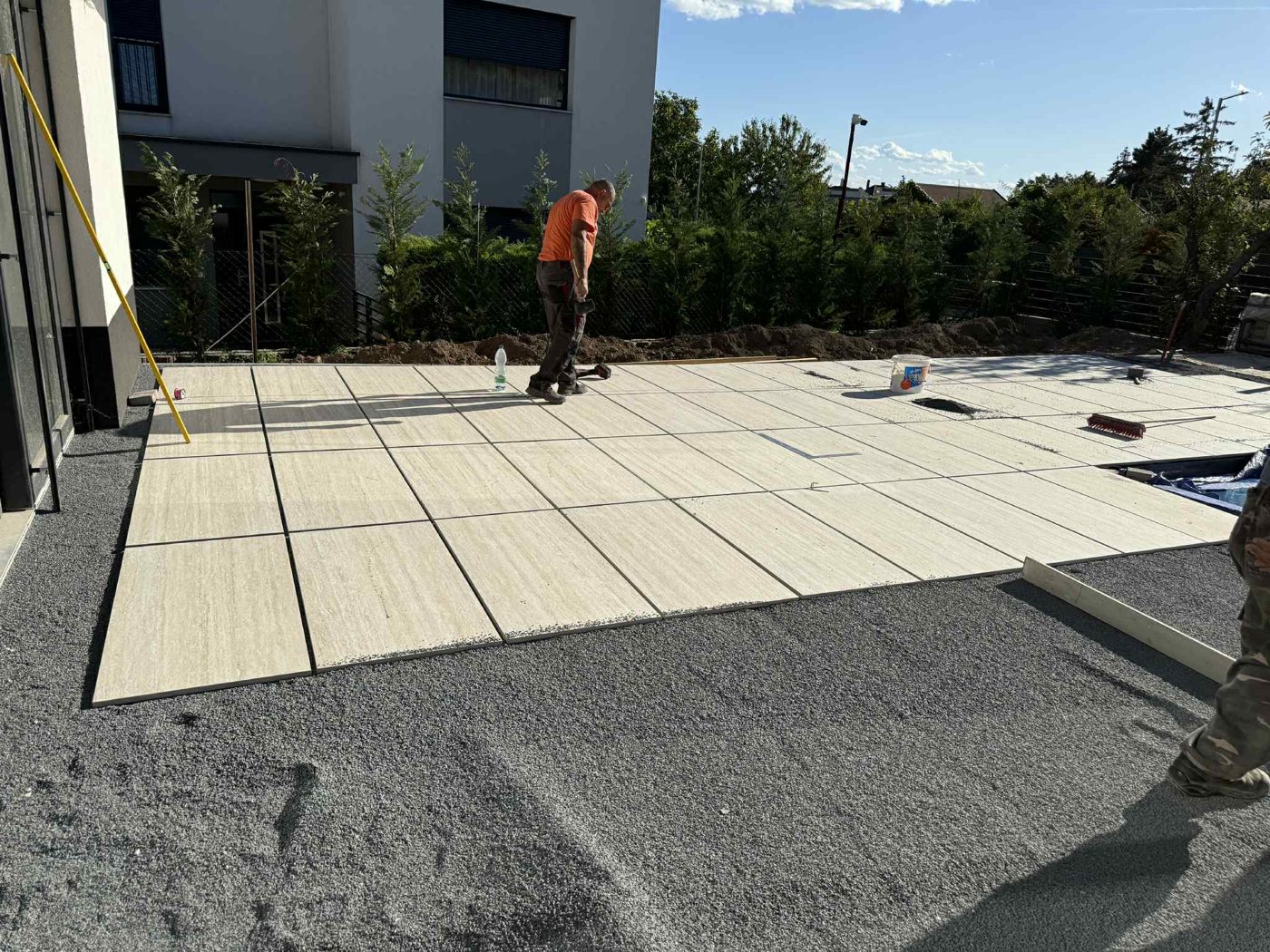
- Elegant appearance: thin, large-format slabs give a modern, clean look, very much in line with contemporary Costa del Sol architecture.
- Lower price: within the same product type, less material means lower cost.
- Easier handling: less weight, easier to move and lay.
- Indoor–outdoor continuity: a similar slab can be chosen for the interior and the terrace for a unified effect.
Where are they NOT suitable?
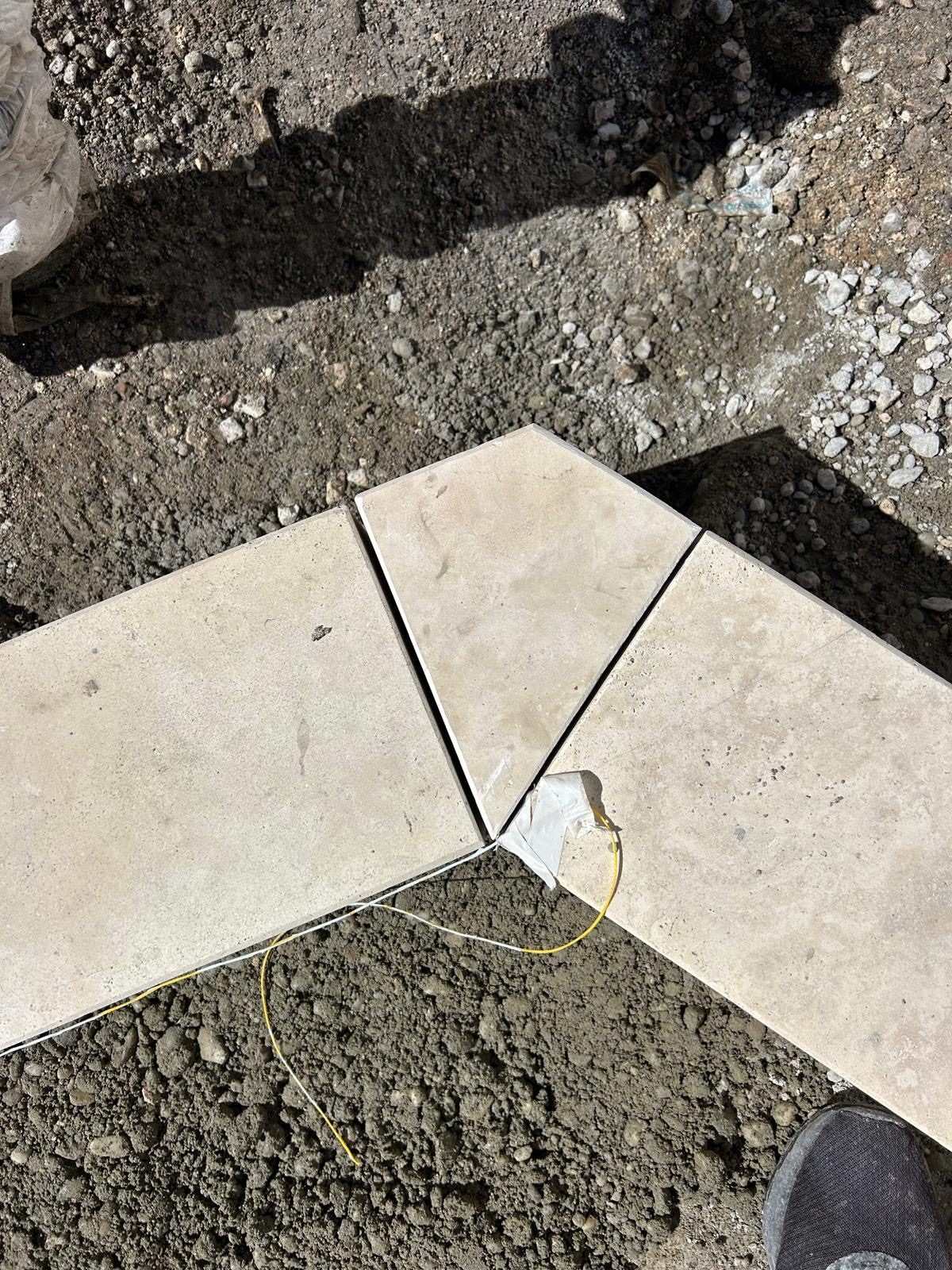
The biggest limitation of thin pavers is load capacity. For car traffic — let alone heavier vehicles — a thin slab is not suitable in the classic system of laying on a bedding layer: there, 6 cm is the minimum thickness. A thin slab does not distribute point loads the way a thick paver does, so the risk of cracking is much higher.
Where are they ideal?
- Terraces and balconies: where there is a solid base and only foot traffic.
- Garden paths and stepping stones: decorative pedestrian surfaces.
- The indoor–outdoor transition: creating a continuous flooring look from living room to terrace.
Thin pavers are, in short, an excellent choice wherever there is a firm base and pedestrian use — but for surfaces carrying vehicles, stick with thick pavers laid on a bedding layer. In the right place, the thin slab is an elegant and economical solution.
Not sure which thickness your project needs? We work throughout the province of Málaga. Call +34 613 656 443, write to oficina@adoquin.eu or request a free, no-obligation quote — on the free site survey we help you choose the right product.
Planning a paving project?
Request a free site survey: we measure, advise, and within 1–2 working days you receive a detailed written quote.