Laying block paving — and above all preparing its base — is work that only goes well when done gradually, step by step, with each phase executed precisely. Rushing takes its revenge here. Let us walk through how a good base is built, from choosing the block to the finished bedding layer.
First, choose the paver
The design of the base depends on what you are paving. For foot traffic a 4 cm thick paver is enough; for the weight of a car, 6 cm is the safe choice; for heavy traffic, 8 cm. The thickness of the block and the expected load together determine how thick a load-bearing layer is needed beneath it — if in doubt, our guide to choosing paver thickness will help.
The earthworks
The topsoil must be dug out to its full depth, because its organic content decomposes, settles and causes sinking. The excavation depth covers the full thickness of the build-up: load-bearing layer + bedding layer + paver thickness. The bottom of the excavation is shaped to the final falls from the start — in Málaga, where an autumn storm can hit with real violence, that fall towards the drainage is half the life of the pavement.
The load-bearing layer
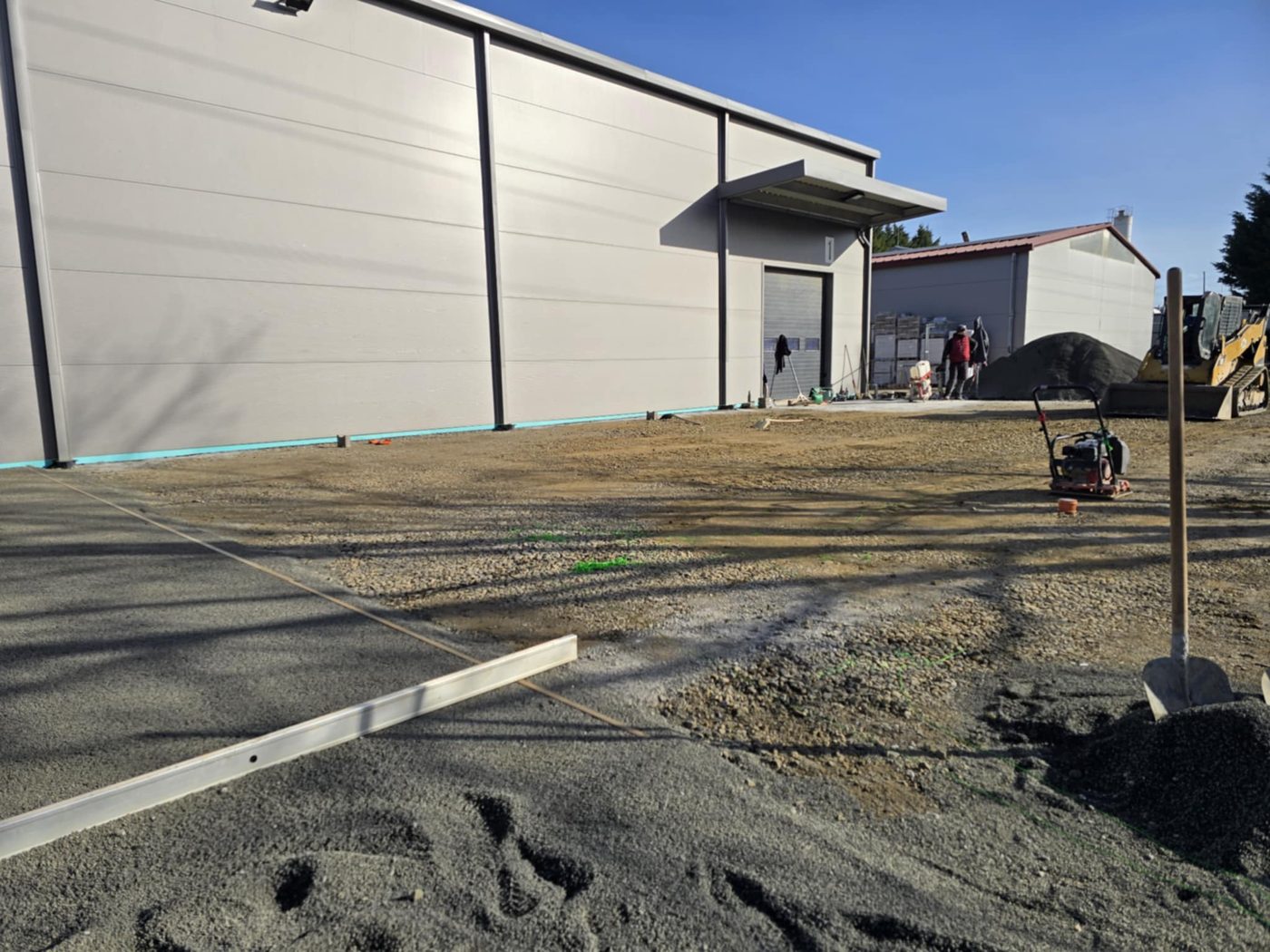
Onto the formation goes coarse-graded crushed stone (e.g. 0/32 or 0/45), spread in 10–15 cm layers, each compacted with a plate compactor. This layer carries the water away and spreads the loads — it is the key to the pavement's service life. Proper compaction is not optional.
The edge restraints
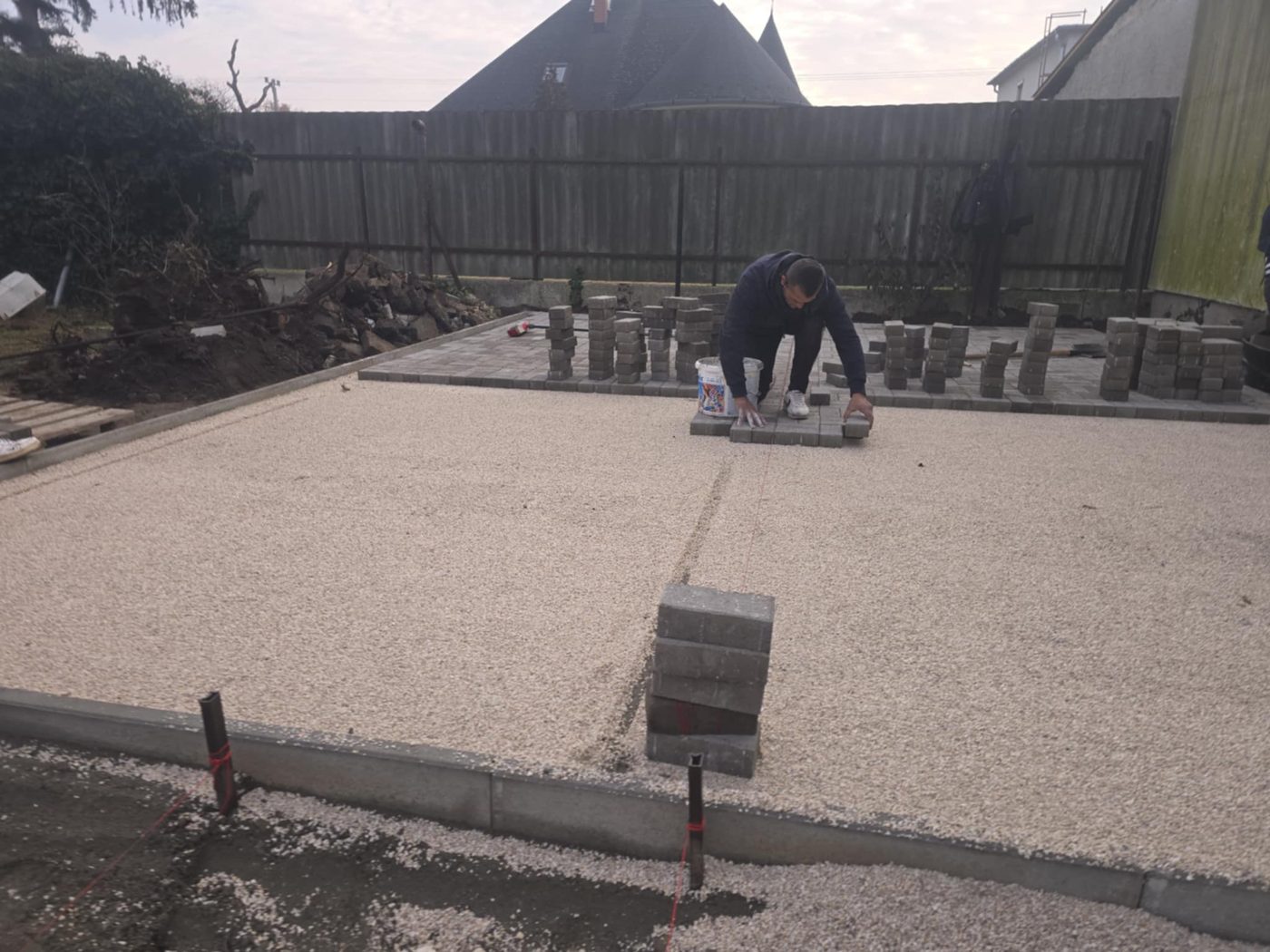
Before spreading the bedding layer, it pays to install the kerbs, set on a concrete bed and secured with a concrete haunch. The kerb provides the lateral restraint for the pavement; without it, the edges gradually creep apart over time.
The bedding layer
Onto the compacted load-bearing layer go 3–5 cm of fine grit (e.g. 2/5 mm), screeded off rails until perfectly smooth. From this point on, nobody steps on it — the blocks are laid working forwards from the paving already placed.
Base preparation for block paving is, in short, a process that demands patience and precision, but one that is easy to follow. Whoever executes every layer with care ends up with a base on which the pavement holds its level for decades.
Rather leave it to professionals? We work throughout the province of Málaga. Call us on +34 613 656 443, e-mail oficina@adoquin.eu or request a free, no-obligation quote with a free site survey and measurement.
Planning a paving project?
Request a free site survey: we measure, advise, and within 1–2 working days you receive a detailed written quote.