The thickness of a paving block is not a question of looks but of load-bearing capacity. Choose wrongly and you either pay more than you need to, or the pavement fails within a few years. Here is the simple rule.
4 cm – pedestrian surfaces
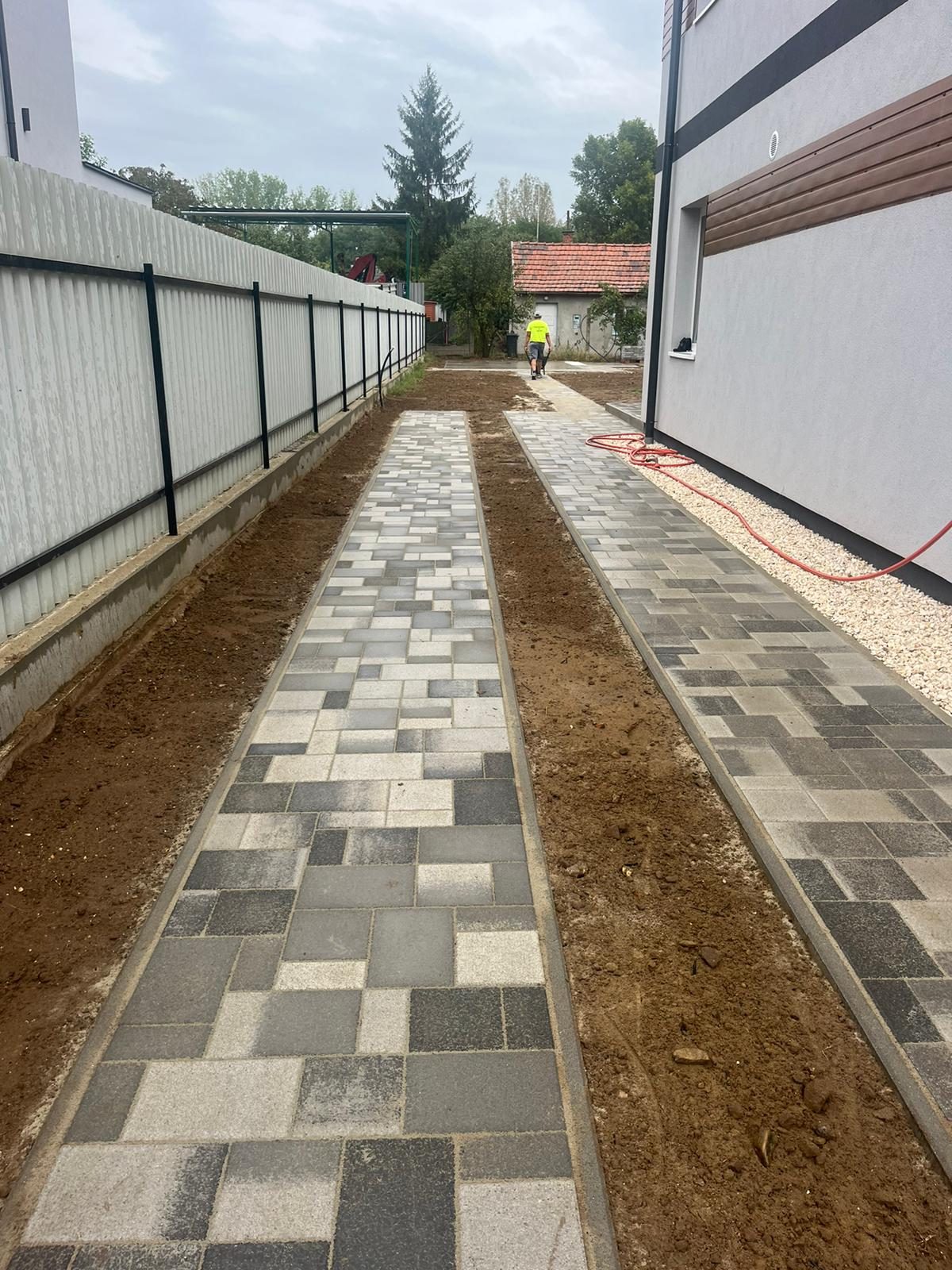
Footpaths, patio-terraces, garden paths, seating areas – anywhere used on foot only. The 4 cm block is perfect and economical for these uses, but never lay it under a vehicle: it will crack the first time a car drives onto it.
6 cm – surfaces carrying cars
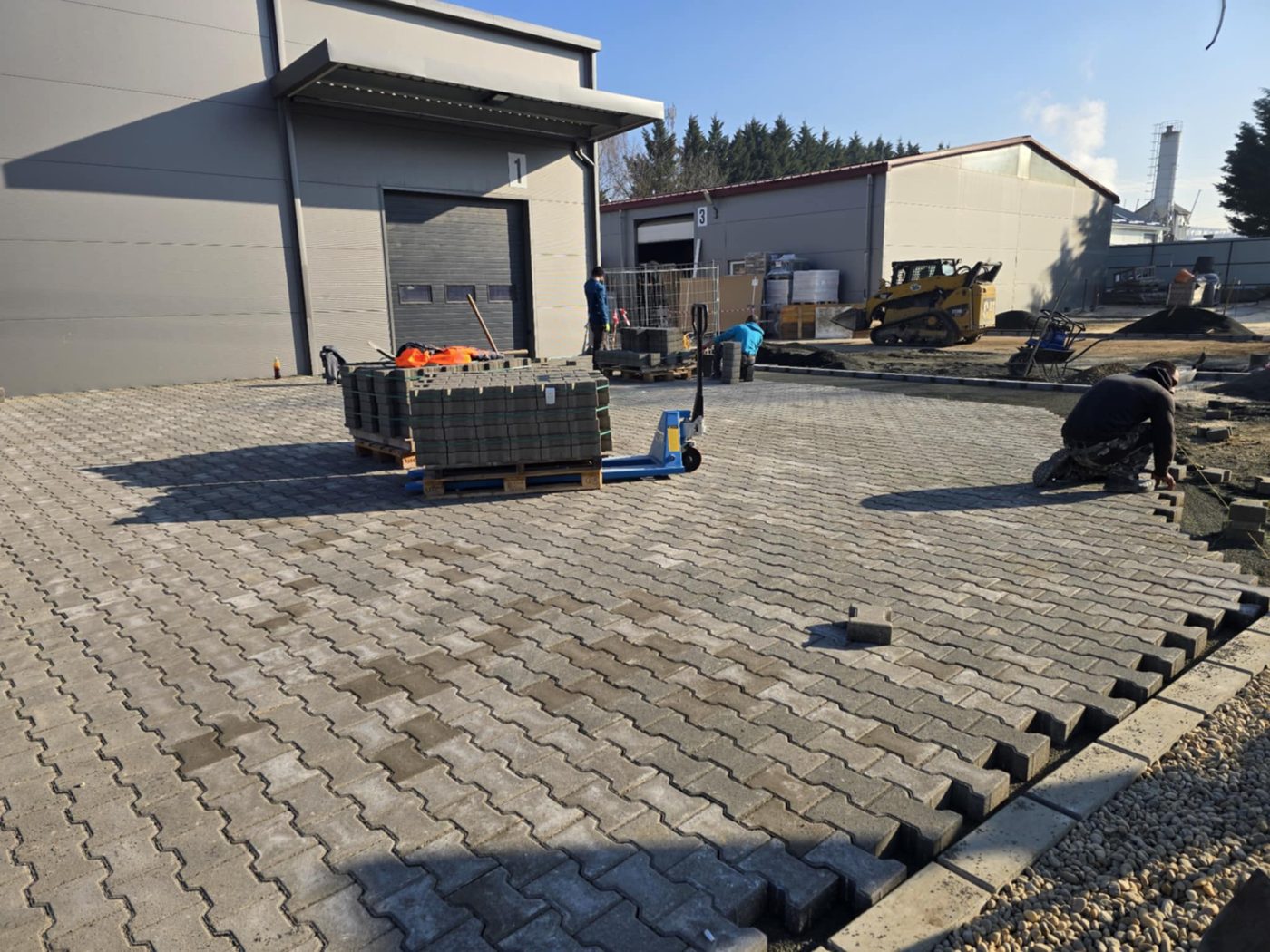
Driveways, yards and garage approaches where a car parks or drives. This is the most common choice for family homes. Our base prices refer precisely to the grey 20×20×6 block. On a proper sub-base, a 6 cm paver carries the load of a passenger car for decades.
8 cm – heavy and industrial loads
Lorry traffic, industrial yards, car parks, logistics areas. Here the load-bearing capacity comes from the thick block and a strong sub-base (deep crushed-stone layer plus cement-treated base) working together. Interlocking shapes further increase resistance to lateral forces.
Thickness alone is not enough
An important misunderstanding needs clearing up: a thick block on its own does not solve everything. An 8 cm paver will still sink on a weak, poorly compacted base, while a 6 cm paver on a well-built sub-base carries car traffic for decades. Thickness and the layer build-up must be designed together for the expected load – they are one system. We cover this in detail in the article how much sub-base does paving need?.
Thickness is decided by the load, not by the look.
A load-bearing question, not an aesthetic one
The thickness of the paver is determined solely by the expected load. A wrong choice can fail in two directions: put too thin a block under a car and it breaks; put a needlessly thick block on a pedestrian surface and you overpay. The simple rule below settles most cases.
Decision table: which thickness for what?
Choosing the thickness is easy if you start from the actual use. This practical guide covers the most common cases:
- Pedestrian, light loads (4 cm): garden paths, patios, seating areas, walkways – surfaces no vehicle ever drives onto.
- Passenger-car loads (6 cm): driveway, car-accessed yard, garage entrance – the most common case at family homes.
- Heavy, industrial loads (8 cm): lorry traffic, forklifts, car parks, industrial yards, logistics areas.
What happens if you choose wrongly?
Too thin a block is the most frequent and the most expensive mistake. Lay a 4 cm pedestrian block under a car and it cracks or breaks within the first few passes – and the entire surface has to be relaid. Too thick a block is the opposite error: 8 cm pavers on a pedestrian surface are simply wasted money. The right thickness matches the use – no more, no less.
Shape and bond matter too
Load-bearing capacity is influenced not only by thickness but also by the block shape and the laying pattern. Interlocking blocks and the herringbone bond distribute loads better than plain square blocks laid in simple rows. Under heavy loads, interlocking pavers are therefore often the choice, and the bond is selected for strength, not just for looks.
Mixed-use surfaces
In practice, many yards combine pedestrian and vehicle zones. The most economical solution is then thickness by zone: 6 cm blocks on a reinforced base in the driving area, 4 cm blocks on a lighter build-up in the pedestrian area. That way you neither skimp on the vehicle zone (where it would be dangerous) nor overpay for the pedestrian surface. The calculator helps you plan and price each variant.
Block size and its relationship to thickness
Besides thickness, the surface area of each unit matters. Large-format slabs spread the load over a bigger area but are more sensitive to point loads and to unevenness in the sub-base – so large formats should only go on trafficked surfaces with the right thickness and a flawless base. Smaller blocks follow the surface more flexibly and cope better with concentrated loads.
Climate and durability in the province of Málaga
On the Costa del Sol the pavement's enemy is not frost but intense sun, salty coastal air and, above all, the torrential autumn rains (DANA events). Always choose concrete pavers certified to UNE-EN 1338, with good abrasion resistance and controlled water absorption, and take drainage as seriously as thickness. In the inland comarcas (Ronda, Antequera) occasional light frosts do occur; there, a freeze–thaw-resistant block is also worthwhile. Thickness answers the load; concrete quality answers the climate.
Thickness and price
A thicker block contains more material, so it costs more, and it also calls for a thicker sub-base. The 6 cm car-rated block and its build-up cost more than the 4 cm pedestrian solution, and the 8 cm industrial option is the most expensive. That is exactly why the thickness must match the use: surplus thickness is surplus cost, while undersizing risks the failure of the whole surface.
The decision in a nutshell
If in doubt: foot traffic only, 4 cm; passenger cars, 6 cm; heavy and industrial traffic, 8 cm – and in every case UNE-EN 1338 certified quality with a sub-base sized for the load. For mixed use, choose thickness by zone – neither the thickest everywhere nor the lightest everywhere. During the free site survey we help you decide precisely, and the calculator shows the price of the chosen build-up.
Worked example: the price of the wrong thickness
If, to save money, 4 cm pedestrian blocks are laid on a driveway, they start cracking under the first few passes and broken units appear within months. The "saving" is lost entirely, because the whole surface has to be relaid with 6 cm blocks. Choosing the right thickness is not an extra cost – it is how you avoid a needless rebuild.
Myth: "8 cm is always the safer bet"
Many people assume the thickest block is always the safest choice. The reality: an 8 cm block on a pedestrian surface is wasted money, and the load-bearing capacity comes from the sub-base anyway. The right thickness matches the actual load – no more, no less. Oversizing is just as wasteful as undersizing is risky.
Summary
- 4 cm: pedestrian surfaces; 6 cm: passenger cars; 8 cm: heavy/industrial loads.
- In every case, UNE-EN 1338 certified quality with a sub-base sized for the load.
- Interlocking shapes and the herringbone bond increase load-bearing capacity.
- Even a thick block fails on a weak base: the two must be designed together.
- For mixed use, choose thickness zone by zone.
Key terms
UNE-EN 1338: the European quality standard for concrete paving blocks; it guarantees strength, durability and controlled water absorption.
Thickness: the block dimension matched to the load: 4/6/8 cm.
Frequently asked questions
How thick should pavers be for a driveway?
For passenger-car loads, 6 cm is the right thickness.
What are 4 cm pavers good for?
Pedestrian surfaces: footpaths, patios, garden paths and seating areas.
When do you need 8 cm pavers?
For heavy, industrial loads: lorry traffic, industrial yards, car parks and logistics areas.
Unsure which thickness your project needs? Call us on +34 613 656 443, write to oficina@adoquin.eu, or get an instant estimate with the calculator. The site survey and measurement are free throughout the province of Málaga.
Planning a paving project?
Request a free site survey: we measure, advise, and within 1–2 working days you receive a detailed written quote.