Alongside block paving, the cast-in-place (monolithic) concrete footpath is the other classic garden surface. Its material cost can be lower, it goes in quickly, and it produces a genuinely solid surface. In return, it is far less forgiving: if a mistake is made, it is hard to correct later, because a continuous slab of concrete cannot be lifted and re-laid the way a single paver can.
When is concrete a good choice?
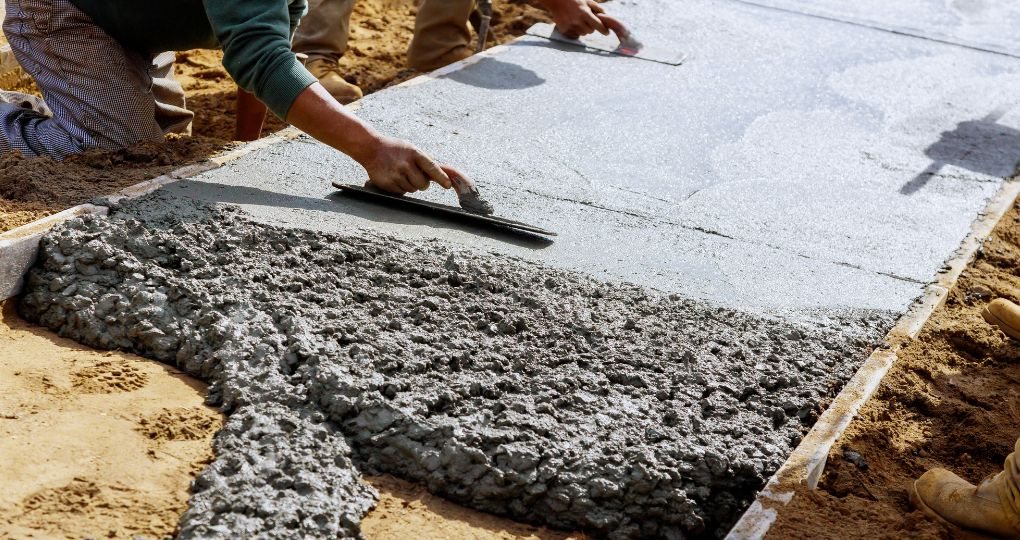
Monolithic concrete performs well where you need a large, continuous, flat surface and it does not matter that the structure cannot be dismantled or repaired piece by piece. Typical examples: a back path to an outbuilding, a driveway or an industrial-style yard. Where you want an aesthetically refined, patterned surface, however, or where services might one day run beneath the pavement, block paving is the more flexible solution.
Here too, the base matters most
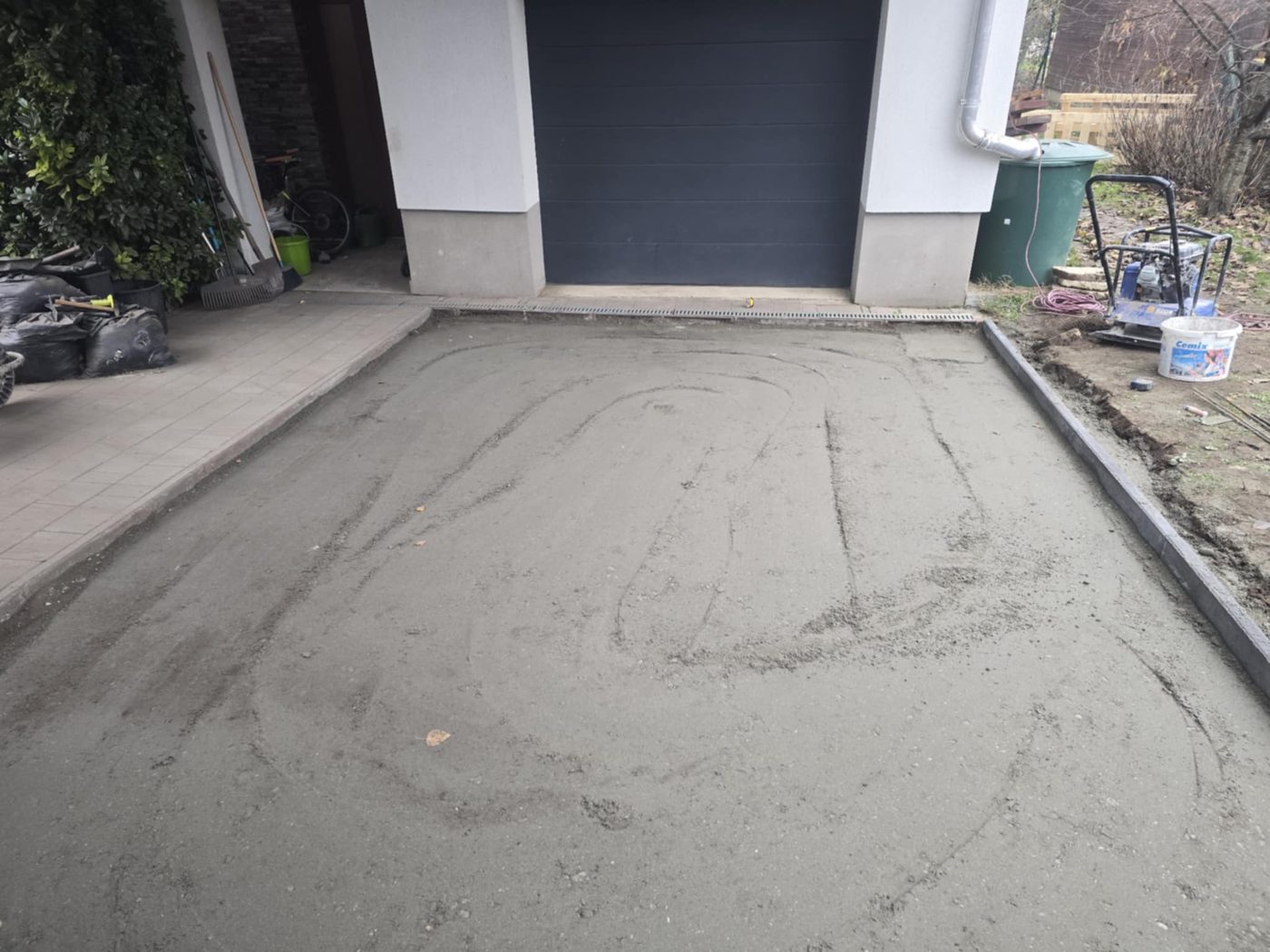
A concrete footpath does not replace the sub-base. Here as well, the topsoil must be excavated and a compacted crushed-stone (zahorra) base built beneath. It is needed so the slab bears evenly and does not crack from differential settlement of the ground — particularly after the torrential autumn rains, when a poorly prepared subgrade can wash out and give way. A plastic sheet can be laid over the base so the fresh concrete does not lose its water into the ground too quickly.
Reinforcement and thickness
For a footpath carrying pedestrians, 8–10 cm of thickness is sufficient; for a driveway, allow 12–15 cm instead. Welded steel mesh protects against cracking, and it must sit at mid-height of the slab — never resting on the bottom or pushed up to the surface.
Expansion joints: the step most people skip
Concrete expands and contracts with temperature changes — and in Málaga province the difference between a slab in the August sun and a clear winter night is considerable. If you give it no room, it will crack — and it will crack where it chooses, not where you would like. That is why the surface is divided into bays of a few square metres with expansion joints, formed either by cutting a groove into the fresh concrete or by casting in a joint strip.
Surface finish and slip resistance
Mirror-smooth concrete is dangerously slippery in the rain. A lightly textured surface, drawn over with a broom, is much safer — and has more character besides. For a more decorative result, you can choose stamped (imprinted) concrete, which imitates the look of pavers or natural stone.
A concrete footpath is therefore an excellent solution in the right place — just do not underestimate the details. The trio of base, reinforcement and expansion joints decides whether, in a few years, you will be looking at a smooth surface or a web of cracks in your garden. If you are torn between concrete and pavers, you may find our article on concrete block paving useful.
Rather leave it to professionals? We work throughout the province of Málaga: call us on +34 613 656 443, e-mail oficina@adoquin.eu or request a free quote with a free site survey.
Planning a paving project?
Request a free site survey: we measure, advise, and within 1–2 working days you receive a detailed written quote.