In block paving, the joints often get less attention than they deserve — yet their role is decisive. The correct gap between blocks, a well-chosen jointing material and careful workmanship all contribute greatly to the pavement holding its level for many years without damage or heaving. On top of that, the colour and width of the joints have a serious influence on how the finished surface looks.
Why can't the joints be left empty?
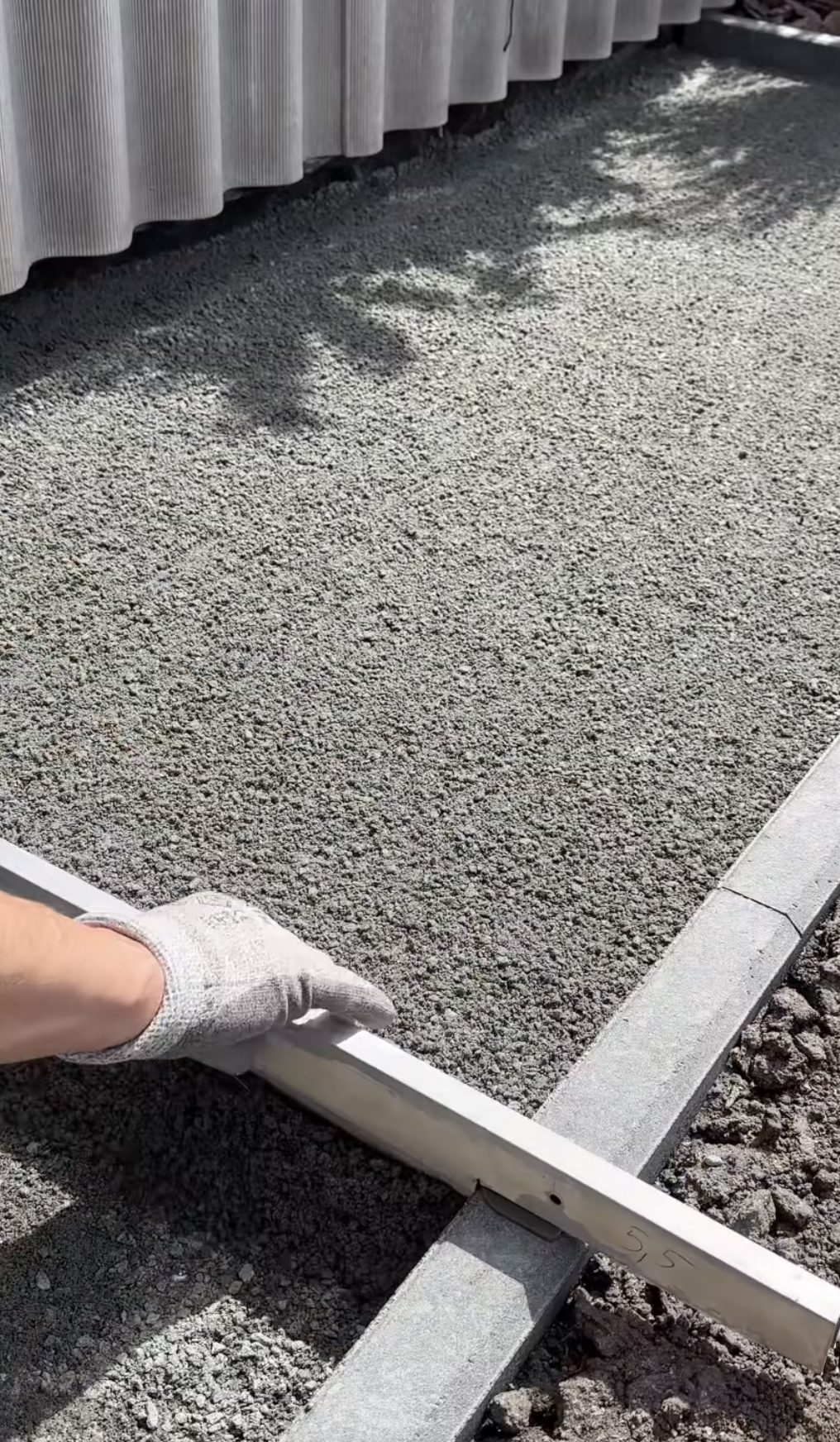
The joint is not decoration — it is a structural element. The gap between blocks accommodates thermal expansion (no small matter under the Málaga summer sun) and spreads load between neighbouring blocks. If the joint is left empty, water washes material down into the laying course, the jointing sand erodes away and the blocks start to move. A well-filled joint, by contrast, binds the paving into a single surface that works as one.
Permeable jointing
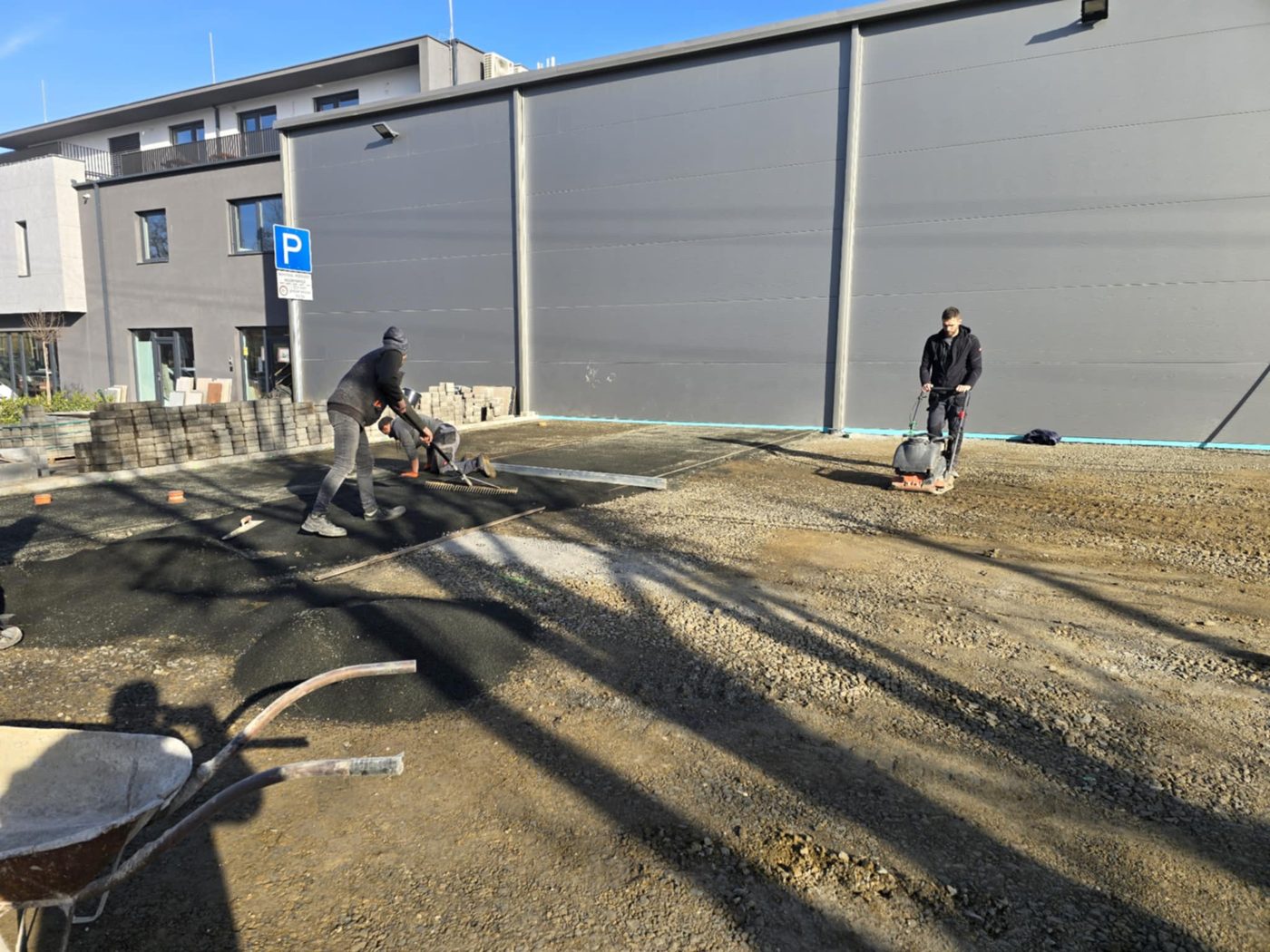
With traditional, permeable jointing, fine silica sand or a special jointing sand is swept into the gaps. Rainwater filters through it into the ground, the pavement "breathes", and no separate surface drainage is required. This is the classic, natural solution — perfect for most garden surfaces.
- Advantage: water soaks into the ground; no standing water on the surface.
- Drawback: it can wash out over time and needs topping up, and weeds take hold more easily.
Sealed (impermeable) jointing
Cement-based sealed jointing hardens and does not let water through. It is used wherever water must not get beneath the pavement — on sloping surfaces where run-off is handled by a drainage channel, or where the paving carries heavy loads. In return it demands careful workmanship and precise design of the falls.
- Advantage: stable, weed-free, durable, with a very neat finish.
- Drawback: requires surface drainage and more precise execution.
The jointing process
- The paving and the joints must be clean and — depending on the joint type — dry or damp.
- The jointing material is poured onto the surface and worked into the gaps with a rubber squeegee, in diagonal strokes.
- The excess is carefully cleaned off so it cannot dry onto the face of the blocks.
- The material is left to cure per the manufacturer's instructions, keeping load off the surface in the meantime.
Jointing is, in short, the final phase of block paving — unfairly overlooked, yet absolutely crucial. Take your time over it and choose deliberately between permeable and sealed jointing, and you get a pavement that remains a pleasure, both in function and in looks, for years.
Does your paving need re-jointing, or do you want it done right from the start? Call us on +34 613 656 443, write to oficina@adoquin.eu or ask for a no-obligation quote — we work throughout the province of Málaga.
Planning a paving project?
Request a free site survey: we measure, advise, and within 1–2 working days you receive a detailed written quote.