Paving the yard is one of the most striking and durable improvements you can make to a home. Planned well, it turns the space into something tidy, easy to keep clean and genuinely usable; planned badly, you end up with standing water, sunken patches and mud. Here is what to pay attention to before you start, drawn from projects we have completed across the province of Málaga, from Marbella to Vélez-Málaga.
Dividing the yard into functional zones
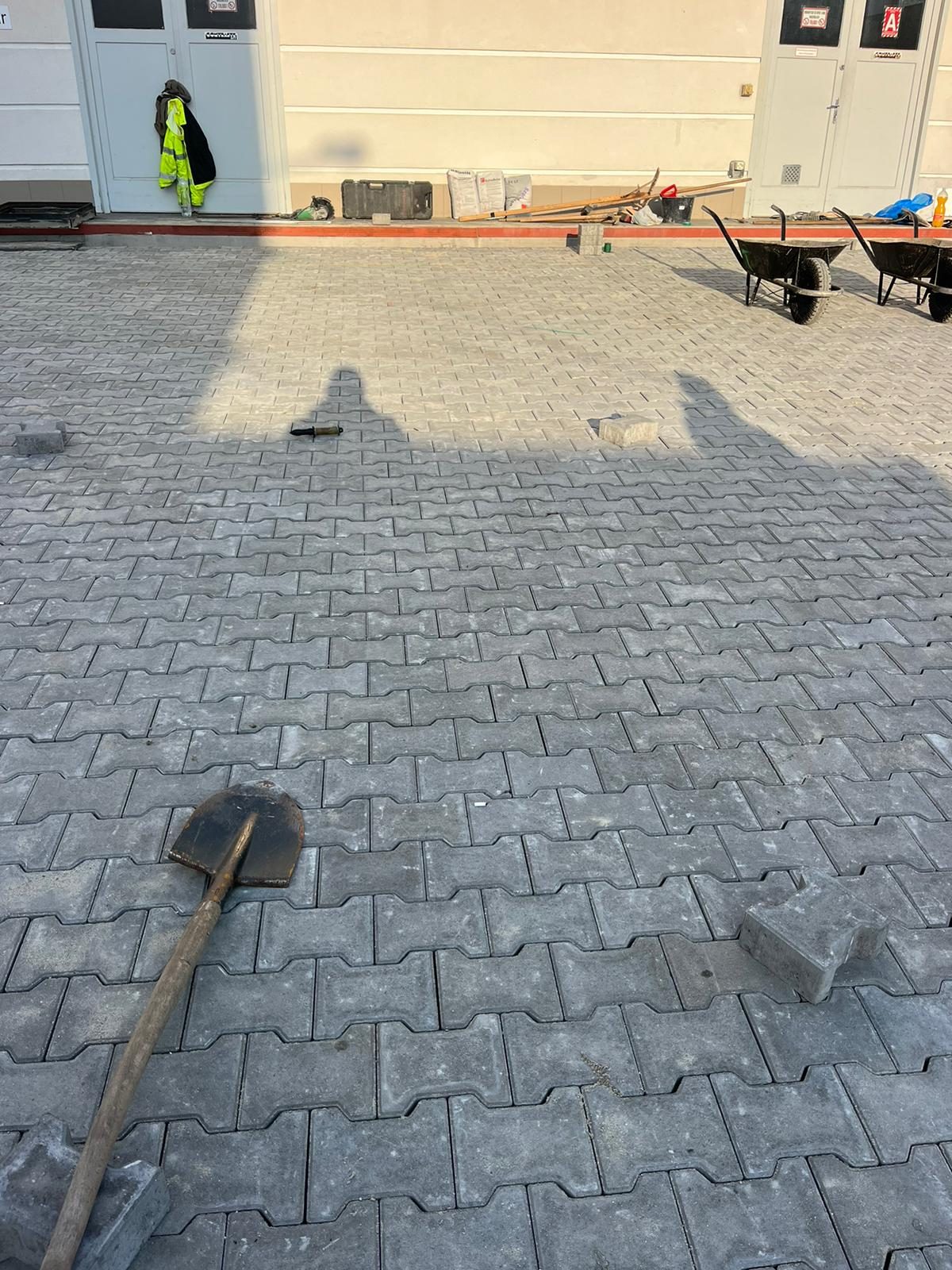
A well-designed yard is not a single uniform surface but a system of functional zones. It pays to think in advance about where the car will drive, where people walk, where the seating or dining area will be, and where the vegetable patch or storage goes. The vehicle zone needs thicker pavers (6 cm) and a stronger sub-base; a lighter build-up is enough for pedestrian areas. A different laying pattern or colour for each zone also structures the space visually.
Drainage: the key to a long-lasting yard
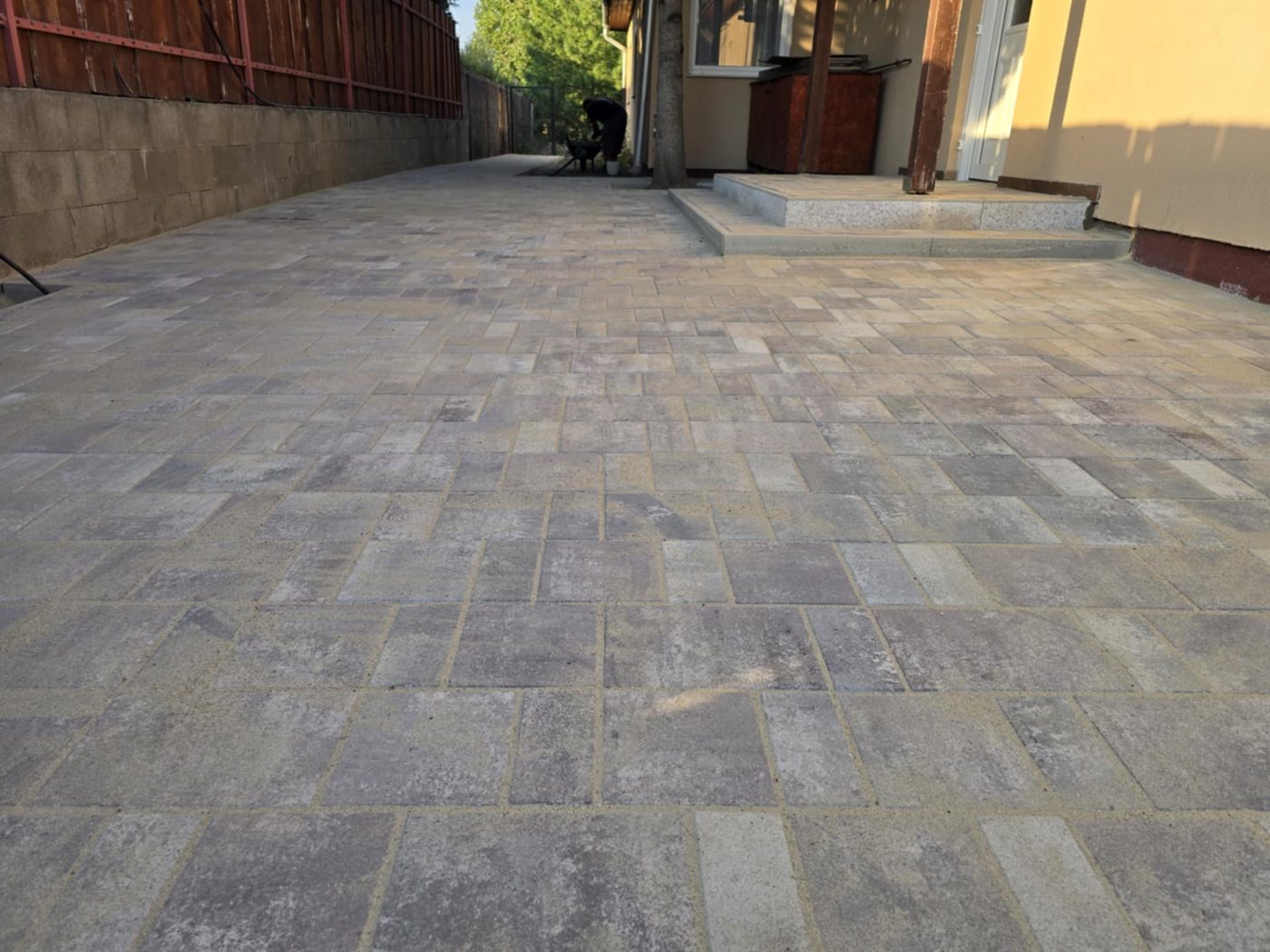
The yard must always fall away from the building, by at least 1.5–2 cm per metre. Where a lot of water collects — for example in the path of the roof downpipes — we install a drainage channel. In the province of Málaga this is no small detail: the torrential autumn rain events (the notorious DANA storms) can drop weeks' worth of water in a few hours, and standing water is not just a nuisance — it washes out the bedding layer and can threaten the house's foundations. Managing water is what makes a yard last for decades.
Choosing materials and patterns
Grey concrete block paving is the most practical and economical choice, but coloured, tumbled or large-format products give a character of their own. Choose a colour that suits the house and the boundary walls, and be restrained with patterns — too many colours and shapes make the space restless. A calm palette of one or two colours looks serene and timeless; the kerb line and the odd contrasting band are enough to articulate the layout. Large-format flags give a modern, clean look; small or tumbled pavers a more rustic one.
The balance between paved and green areas
In a well-considered yard, not everything is paved. Think about the ratio of paved surface to planting: too much sealed surface heats up in the Málaga summer and all the rain has to be drained away, whereas green areas soak up water and cool the space. On many yards, permeable solutions — grass grid pavers on a rarely used parking spot, wider joints — are a good compromise between load capacity and water management.
Shade, heat and paving colour
The colour of the paving affects how hot it gets in summer, and on the Costa del Sol you notice it. Dark pavers absorb more heat; light, grey and sand-coloured surfaces less. If the yard is sunny and heavily used, choose lighter paving and plan for shade planting or a pergola. A sensible proportion of green area makes for a cooler, more liveable yard.
Trees, planting and the edge of the paving
Where a tree or large plant goes into the yard, leave it room: roots can lift the paving over the years, so plan a tree pit or a generous open surface around trees. Where planting beds meet the paving, an edge restraint (kerb) gives a clean, durable separation.
Lighting and services: before you pave
When designing the yard, think ahead about lighting and the electric and water runs. Laying protective ducting during the groundworks stage is simple and cheap; doing it later means breaking up the finished paving. In a well-planned yard, the cables for garden lights, the outside tap and even an electric-car charger are in place before the first paver is laid.
A safe surface for children
Where children play, a slip-resistant, trip-free surface matters. The slightly textured surface of concrete pavers — or tumbled and washed finishes — gives good grip, and a flat, well-jointed pavement has no trip hazards. The right falls make the surface dry quickly after rain and prevent slippery puddles.
How much does paving a yard cost?
Because yards are usually larger areas, the better rates of the 50–150 m² or 150–300 m² bands often apply: roughly €80–85/m² + VAT (21 %) for a complete pavement build-up (excavation, sub-base, bedding layer and laying). The exact figure depends on the build-up and on the metres of kerb and drainage channel. You can get an estimate with the calculator and see the detail on our paving prices page. For renovation work on private homes, the reduced 10 % VAT rate may also apply under Spanish rules.
A well-thought-out yard is not just better looking — it is more usable and more durable. Time spent planning always pays for itself.
Timescale and handover
Building an average yard takes from a few days to two weeks depending on size, including groundworks, the sub-base, curing times and laying. At handover the surface is compacted, jointed and laid to falls; in the first weeks some topping up of the jointing sand may still be needed.
Case study: a 90 m² back yard
On a typical back yard the task is handling mixed use: a parking spot by the gate, a footpath to the entrance, a seating terrace towards the garden and a vegetable patch. The answer is zoning: 6 cm pavers on a strong base for the vehicle area, a lighter build-up on the walking routes, a more decorative product on the terrace. Drainage is solved with a channel towards the gate and falls towards the garden. The result is a usable, durable, good-looking yard.
Where to spend and where to save
Spend on a good sub-base, on drainage and on durable edge restraints — they are invisible, but they define the yard for decades. Save on the aesthetic extras: a simpler pattern, grey pavers instead of coloured ones, premium products only in the focal areas. This approach gives the best value: a durable structure, a smart appearance and a controlled budget.
Maintenance and long service life
A well-built yard needs minimal upkeep: once or twice a year, check the joints and top up jointing sand washed out by rain, and keep an eye on the kerbs. Weed control, done in time, is a simple job. Use a pressure washer carefully — it can wash the sand out of the joints.
The yard as living space — and property value
A well-designed yard is not just circulation space but living space: outdoor meals, children's play, relaxing. With Málaga's climate you get to enjoy it almost all year round. A tidy, durable paved yard is one of the best-returning improvements to a home: it makes daily life easier and increases the property's value and saleability. And well-resolved drainage protects the house's foundations — a serious long-term value factor.
Summary
- Divide the yard into functional zones (vehicles, pedestrian, seating).
- Drainage — falls away from the building, plus a channel where needed — is the key issue, especially with the torrential autumn rains.
- Light-coloured paving stays cooler; the paved-to-green ratio matters too.
- Lay lighting and service ducts before paving.
- A well-built yard adds property value and needs minimal maintenance.
Key terms
Zoning: building the differently used parts of the yard with different pavement build-ups.
Jointing sand: the material filling the joints between pavers; it stabilises the pavement and discourages weeds.
Frequently asked questions
How do I plan the paving of my yard?
Divide it into functional zones (vehicles, pedestrian, seating), design the drainage to fall away from the building, and choose paving that suits the house.
How much does paving a yard cost?
On larger areas the better rates of the 50–150 or 150–300 m² bands usually apply — around €80–85/m² + VAT for a complete build-up.
What maintenance does a paved yard need?
An annual check of the joints and topping up of jointing sand, keeping an eye on the edge restraints, and timely weed control.
Shall we plan your yard together? Call +34 613 656 443 or write to oficina@adoquin.eu — on the free site survey we go through the zones, the drainage and the materials, and the calculator gives you a guide price right away.
Planning a paving project?
Request a free site survey: we measure, advise, and within 1–2 working days you receive a detailed written quote.